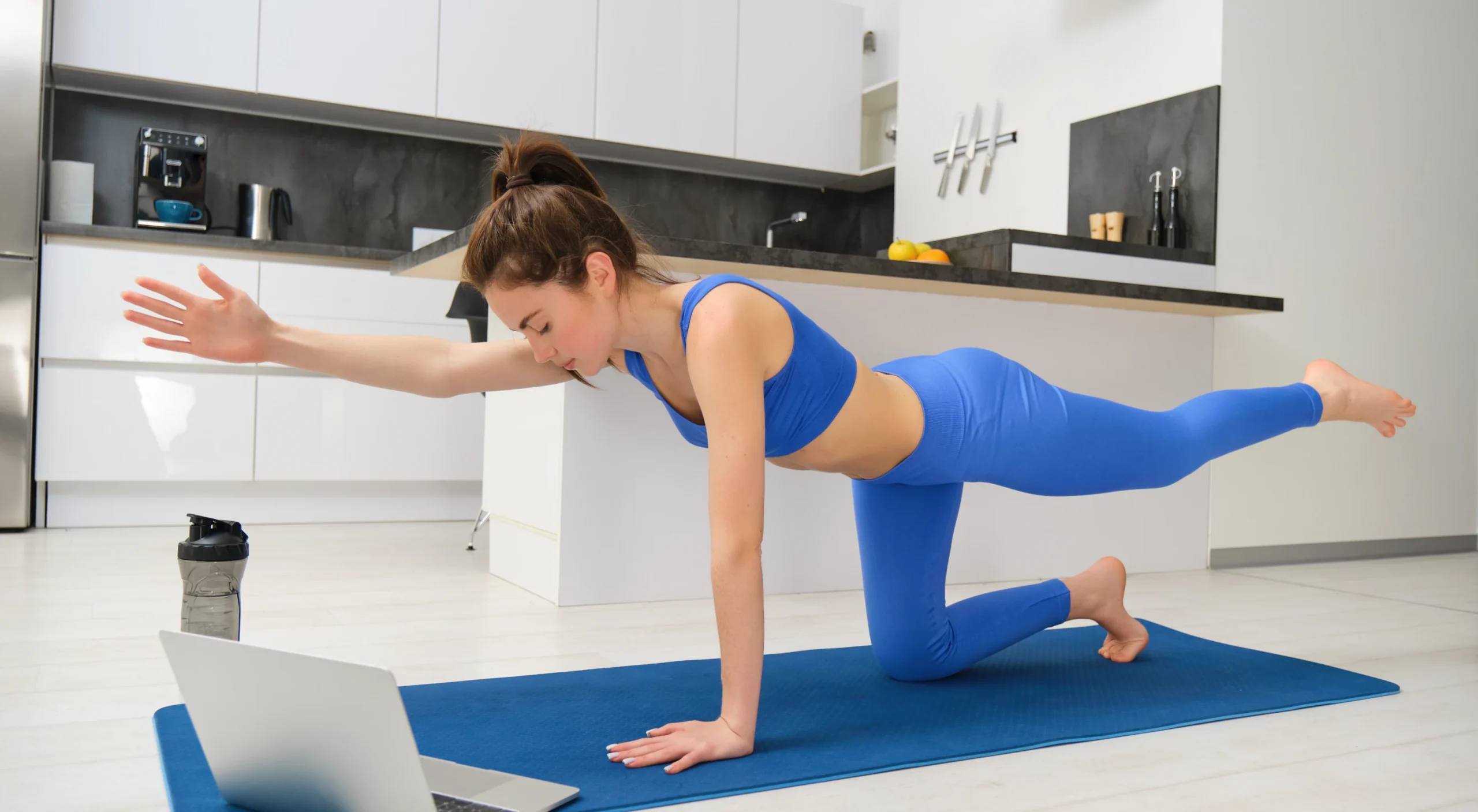
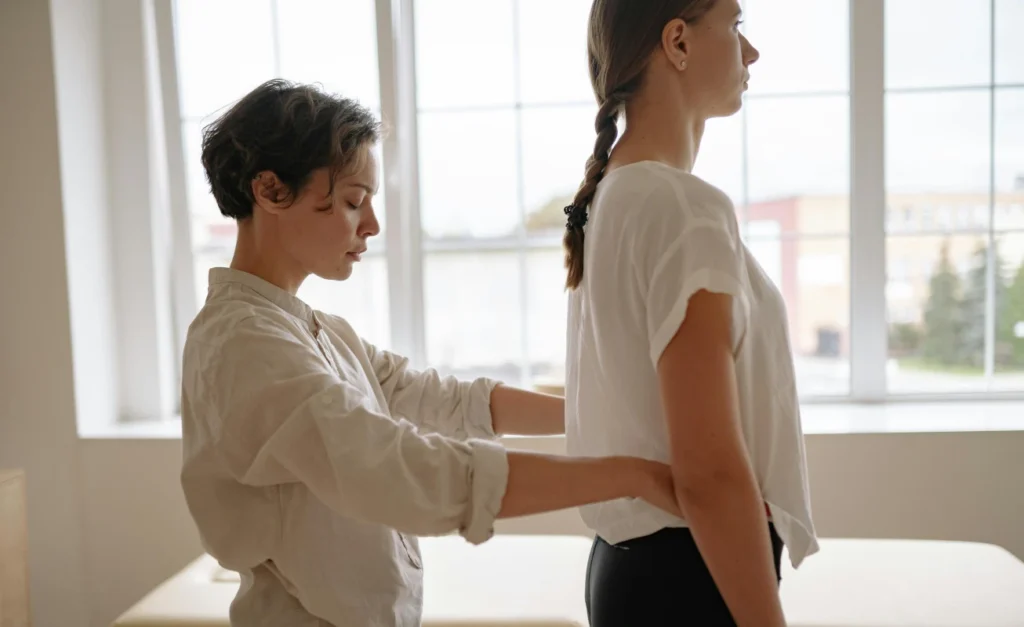
Many adults with scoliosis wonder:
- Will exercise make my curve worse?
- Can exercise reduce my curve?
- Will it help or increase pain?
For years, advice has ranged from “only do scoliosis-specific therapy” to “do anything you want” to “avoid exercise altogether.” Fortunately, expert consensus is becoming clearer.
At the World Low Back Pain Congress in Antwerp (2019), researchers presented practical guidelines for safe exercise selection in adults with scoliosis. While high-quality studies are still limited, their recommendations offer helpful direction. Here’s what was said:
1. Address Pain First
If you have scoliosis without pain, you can usually begin a general exercise program safely.
If you have pain, consult a scoliosis-informed physiotherapist first. Pain may come from:
- Muscle imbalance
- Facet joint irritation
- Disc loading
- Poor postural control
A professional assessment ensures exercises are modified appropriately before you begin.
2. Control Your Curves While Exercising
The key principle: Don’t allow your curves to collapse during exercise.
That means:
- Maintain core support
- Avoid excessive spinal compression
- Develop body awareness
- Keep visual alignment as neutral as possible
Working initially with a core specialist or scoliosis-trained therapist can help you build sufficient postural control before progressing to more demanding activities.
Scoliosis-Specific Exercise Systems
Two commonly referenced approaches include:
- Schroth method
- Scoliologic Best Practice
These fall under the umbrella of Physiotherapeutic Scoliosis Specific Exercises (PSSE) and focus on breathing, de-rotation, and curve correction strategies.
3. Exercise in Neutral (If Your Curve Is Complex)
For more complex spinal deformities, experts suggest exercising in neutral spine.
Determining “complex” often requires specialized imaging measurements such as:
- Sacral slope
- Pelvic incidence
- Advanced adult deformity classifications
However, these measurements are not always routinely included on standard X-rays.
Practical Takeaway
If full curve documentation isn’t available:
- Exercise in neutral when possible, especially if your curve is lumbar or thoraco-lumbar. The Healthy Back has free resources showing you how to exercise in neutral posture.
- Avoid extreme spinal positions unless well controlled
That said, strict neutrality can be limiting. Many enjoyable sports require rotation and extension (tennis, golf, yoga).
Importantly:
Experts found no strong evidence showing that exercises performed out of neutral cause harm in adults.
Safe Exercises for Adults with Scoliosis
Staying active is essential for:
- Bone density
- Muscle strength
- Joint mobility
- Healthy aging
- Pain reduction
Generally Safe Activities
The Directional Preference Resources are Free on the Healthy Back site.
- Walking
- Swimming
- Stationary cycling
- Pilates (with modifications)
- Yoga (avoid deep end-range extremes)
- Strength training with good form
- Healthy Back Online Program in Neutral www.healthyback.ca
Practical Guidelines for Adults with Scoliosis
- Modify activities that cause pain during or shortly after exercise.
- Learn curve control through PSSE or strong core training.
- Avoid extreme spinal positions (e.g., try half Cobra instead of full Cobra).
- Be cautious with high-level competitive sports — they increase back pain risk for everyone, not just those with scoliosis.
Final Thoughts
There is no one-size-fits-all answer. Current recommendations are largely based on expert consensus rather than high-quality trials.
But the overall message is clear:
Adults with scoliosis should stay active.
Movement supports spine health, muscle strength, and long-term function. With awareness, modifications, and good guidance when needed, most exercises can be adapted safely.