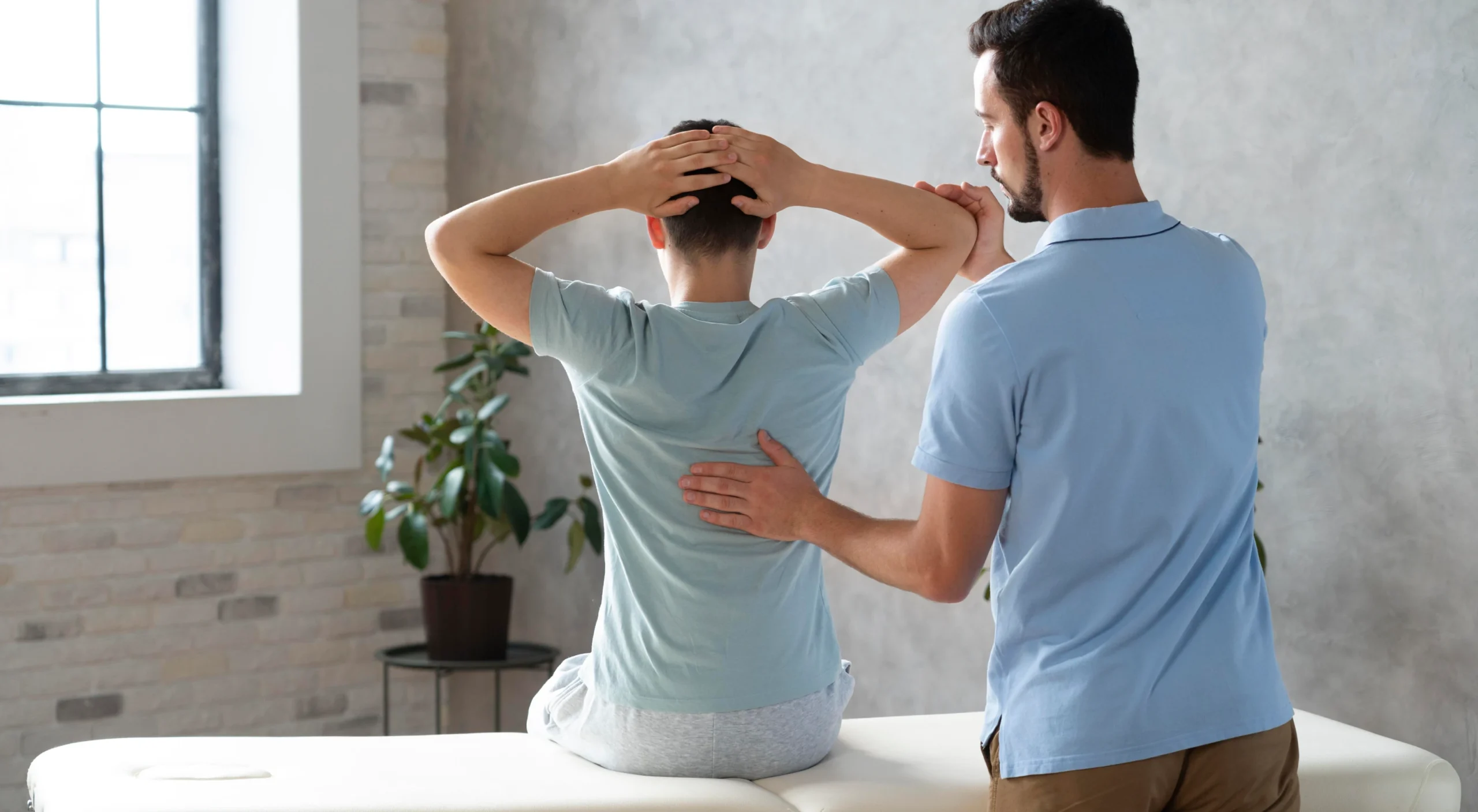
As we age, many of us are diagnosed with Spinal Stenosis.
In most cases, this is due to arthritis—the natural result of a lifetime of stress on the joints and ligaments of the spine. Over time, tissues thicken and bones change, which can reduce the space available for your nerves.
But here’s the most important thing to understand:
👉 A diagnosis of spinal stenosis does not automatically mean you will have pain or limitations.
What matters most is not what your X-ray or MRI shows—it’s whether those changes are actually affecting your ability to move—especially your ability to walk.
With the right approach, many people continue to walk comfortably and stay active. Without it, walking can gradually become more limited and painful.
What Are the Symptoms of Spinal Stenosis?

One of the most noticeable effects of spinal stenosis is how it impacts your ability to walk.
Many people find they can only walk a short distance—sometimes just a block or two—before they have to stop. The discomfort may feel like pain, heaviness, or deep fatigue in the legs, making it difficult to continue.
What surprises most people is how quickly the symptoms improve.
👉 After just 5–10 minutes of sitting, the pain often disappears completely.
But when you start walking again, the symptoms return—often sooner and more intensely. Over time, this cycle can turn a simple walk into careful planning around where you can sit and rest.
This pattern is commonly referred to as neurogenic claudication.
Common symptoms include:
- Low back pain
- Numbness or tingling in the legs or feet
- Heaviness in the legs (like walking through mud)
- A sensation of wearing socks or boots when barefoot
Just as important as what makes symptoms worse is what makes them better.
Symptoms are often relieved by:

- Sitting
- Bending forward
- Leaning on a shopping cart or counter
What Treatments Work for Spinal Stenosis?
Treatment typically begins with conservative care:
- Physiotherapy
- Exercise
- Massage therapy
- Medication
If symptoms persist, injections or surgery may be considered to help improve walking tolerance and reduce pain.
But there’s something important that is often overlooked:
👉 Not all spinal stenosis behaves the same way.
Some symptoms are driven by permanent structural changes, while others are influenced by factors we can change.
Understanding What You Can (and Can’t) Change
I often explain this using the analogy of a suitcase.
The size of the suitcase is fixed—but what you pack inside it is flexible. With careful choices, everything can fit.
And if your suitcase has an expansion zipper, you can create a little extra space when you need it.
👉 Your spine works in a similar way.
Posture is your “expansion zipper.”
Even a small movement—like a gentle pelvic tilt—can increase the space available for your nerves and reduce irritation.
👉 Why this distinction matters
Understanding the difference between what is structural and what is changeable is one of the most important parts of managing spinal stenosis. It shifts your focus away from what you can’t control—and toward what you can.
Many people feel discouraged when they hear about “degeneration” or see changes on an MRI, assuming their condition will only get worse. But in reality, factors like posture, movement, and muscle support often play a major role in symptoms. .
When you target these changeable factors, you can reduce pain, improve walking, and regain confidence in your movement—without relying solely on more invasive treatments.
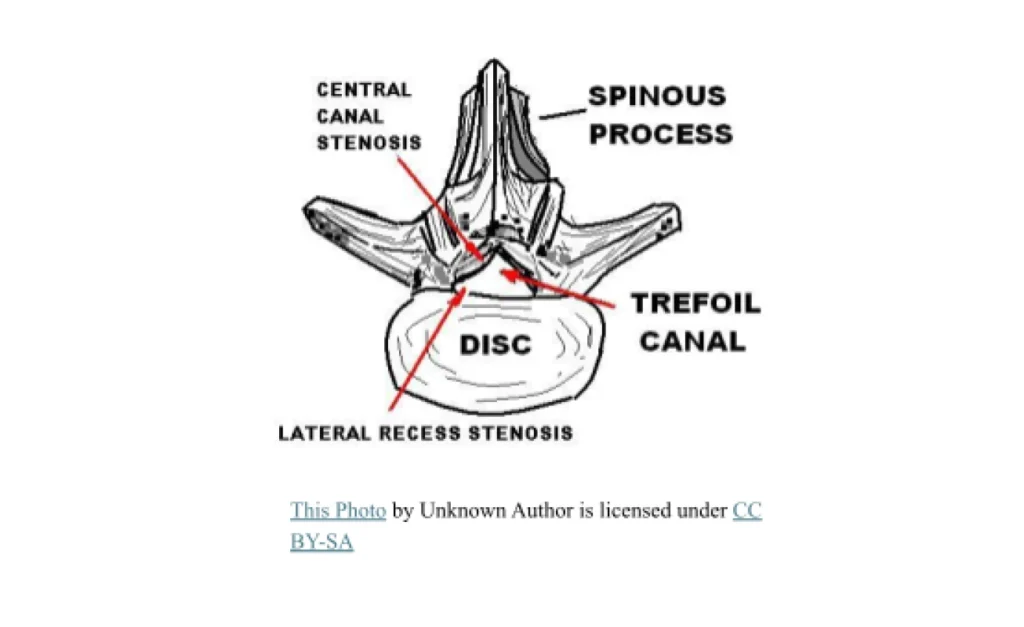
Static Factors (What We Can’t Change)
These are the structural changes seen on imaging:
- Thickened ligaments
- Bone overgrowth
- Degenerative discs
These changes are permanent and, if necessary, may be addressed surgically.
But here’s the key point:
👉 Seeing these changes does not mean you need surgery.
Dynamic Factors (What You Can Change)
These are often the biggest drivers of your symptoms:
- Posture
- Muscle tightness
- Core support
- Movement patterns
These directly influence how much space your nerves have—and can often be improved with the right approach.
A Simple Test: Will Exercise Help You?

Before considering more invasive treatments, try this simple test to see if your posture is causing your pain.
Stand with your back against a wall, feet about 6 inches away.
Place your hand in the curve of your lower back, then gently flatten your back (a pelvic tilt).
👉 This position should feel more comfortable.
Once you find it:
- Practice holding this posture in standing
- Then try maintaining it while walking
What This Means for You
If this small posture change improves your symptoms—even slightly—that’s a very important sign.
👉 It means your back is responding to the right type of movement and positioning.
And it suggests that exercise—done correctly—can help you move with less pain.
But this is where most people get stuck.
👉 Knowing what helps is one thing. Knowing how to build on it safely is another.
The Bottom Line
If you’ve been diagnosed with spinal stenosis, the most important question isn’t what your scan shows—it’s how your body responds to movement.
👉 The right starting point changes everything.
With the right approach, many people can:
- Walk longer distances
- Reduce pain
- Stay active and independent
And often, it starts with something as simple as the right movement in the right direction. Get your FREE Directional Preference videos and get started on the right exercises through the online Healthy Back Program.